
Sarnia Police Chief Derek Davis continues to defend a social media strategies that prioritizes public shaming over legal safeguards, even as it violates his department’s own official communication policies.
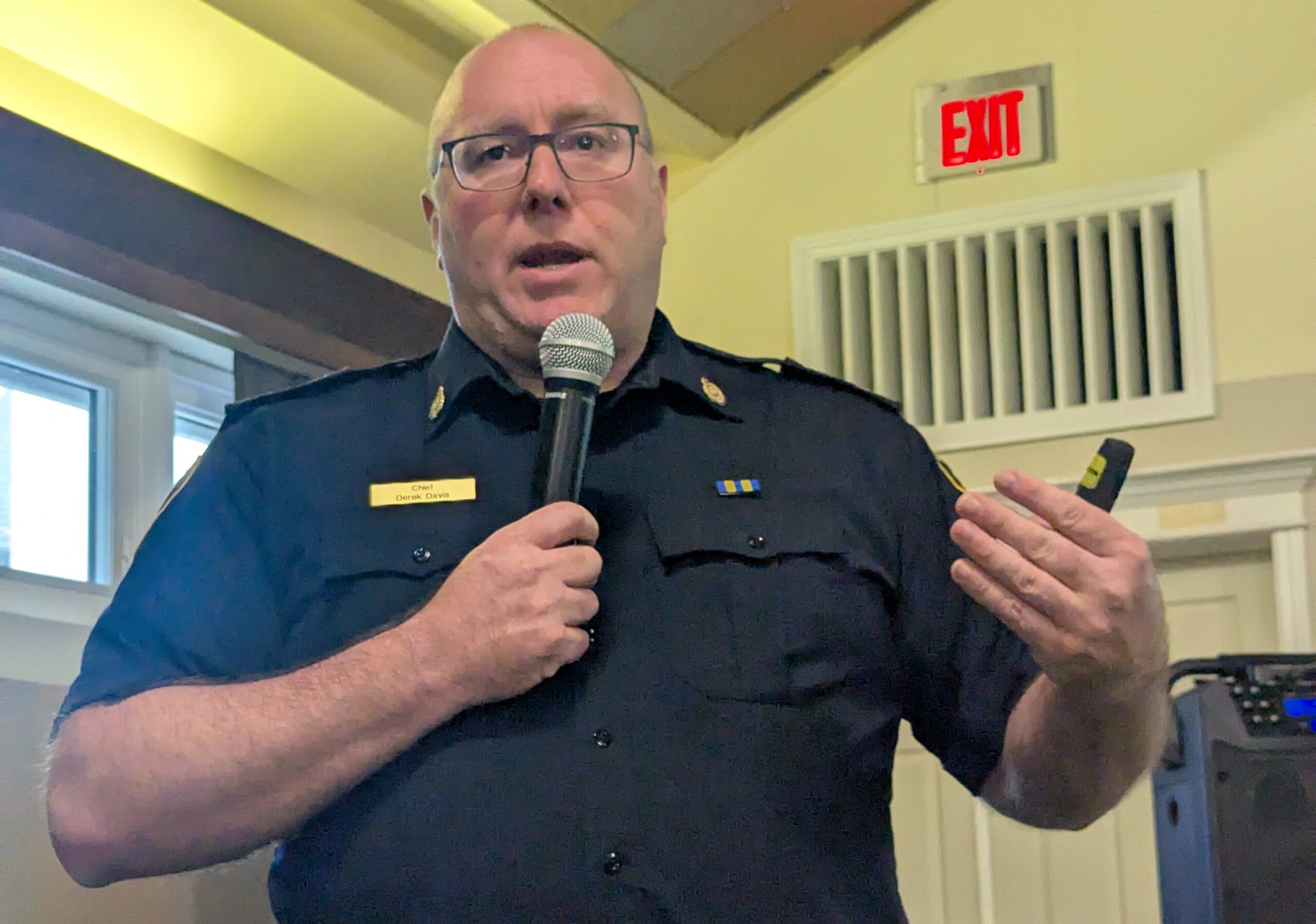
There is a distinct irony in a police chief who spends thousands on "public awareness" videos while ignoring the very rules meant to govern his department’s public conduct. Sarnia Police Chief Derek Davis has turned the service’s Facebook page into a digital pillory, a space where the presumption of innocence is traded for social media engagement and high school-level theatrics.
In a recent column, I examined how Chief Davis is choosing social media engagement over the law. This approach treats the comment section as a town square for vigilantism, where the verdict is delivered the moment the handcuffs are applied. By declaring that individuals have already "chosen" to commit crimes before they ever see a judge, the Chief is inviting a public shaming ritual that has real, lasting consequences for residents.
The human cost of this strategy is best illustrated by the story of Tessa Bird-Carroll. After her photo was posted in connection with a minor theft matter, she became the target of unmoderated, hateful public commentary. The resulting trauma and the fear that this digital footprint will follow her into her future housing and employment highlight the cruelty of a system that prioritizes a "tough on crime" image over the actual well-being of the community.
This behaviour is not just unprofessional; it is a direct violation of the department's own internal policies. Freedom of Information records obtained by The Journal show that Sarnia Police Service Policy COR-001 (Section C-9-c) explicitly prohibits the use of "hashtags, emoji's, tongue-in-cheek humour, sarcasm etc." in official releases. Yet, we have seen headshots of vulnerable people posted as a "12 Days of Christmas" joke. As columnist Josh Walters noted, it is an absolute farce to use vulnerable people as a punchline for easy laughs.
Furthermore, this unmoderated environment is creating a massive legal liability for Sarnia taxpayers. A recent court ruling in London (Belliveau v. Quinlan) establishes that page administrators are responsible for the toxic and defamatory comments they host. An audit of the SPS Facebook page revealed that nearly 10% of all interactions—over 1,600 comments—contained toxic language or potential defamation. By ignoring these, the department is effectively subsidizing a venue for public abuse at the taxpayer's expense.
While the Chief defends these practices as a defence of a "free and democratic society," FOI records show he is simultaneously spending over $10,000 on un-tendered "awareness" videos to market a controversial $120 million headquarters. This includes $4,500 for a single "campaign video" from Frameworks Media Inc. that was authorized without an RFP because it fell just under the Chief's approval limit. It is a calculated move: control the narrative on social media while delaying transparency requests until 2026.
Chief Davis needs to stop performing for the "backyard" vigilantes and start leading like a public servant. Safety is not built in a comment section, and it certainly isn't achieved by shaming the most vulnerable members of our community for political leverage. It is time for the Sarnia Police Service to turn off the comments, follow their own rules, and focus on the actual work of community care.


