
This column by George Esser argues that declining membership in Sarnia’s churches and service clubs signals a damaging cultural shift from community service to self-interest, which he believes can only be countered by fostering genuine, relationship-based engagement.
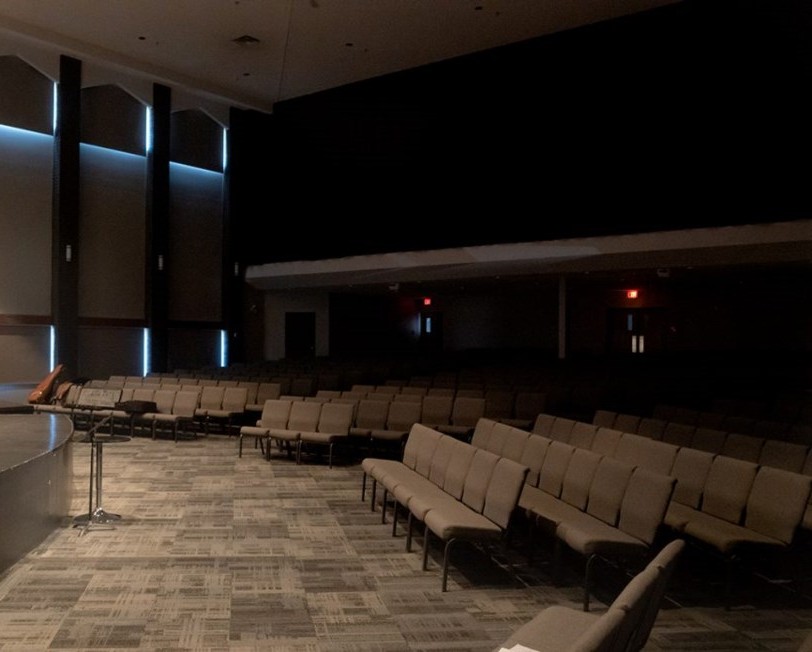
Sarnia’s churches are quieter these days, and it’s not just because the organist is on vacation. As The Sarnia Journal recently explored, secularism is on the rise, with fewer Canadians claiming religious affiliation—down to 68% nationally in 2021 from 78% in 2017, according to Statistics Canada. But it’s not just pews gathering dust. Service clubs like Rotary and Kiwanis are also dwindling, their memberships graying faster than a Sarnia winter. This shift reflects a deeper cultural change: when faith and service fade, we risk moving from “How can I help?” to “What’s in it for me?” The antidote lies in authentic relationships—with a deity, with each other, and with our community.
Let’s start with religion. Too often, it’s reduced to rules and regulations, a spiritual checklist that feels like doing taxes for your soul. Some folks treat it like a cosmic fire insurance policy: follow the rules, avoid the “smoking section” of the afterlife, and hope the non-smoking lounge has better Wi-Fi. But if faith is just about dodging hell with a punch card of good deeds, it’s no wonder people are checking out. A 1999 Gallup poll found people skipped church because it was boring, irrelevant, or too focused on money. I get it—listening to a preacher drone on like a PowerPoint presentation on eternal life isn’t exactly inspiring. But true faith isn’t about conformity; it’s about transformation. At 15, I had an encounter with God that changed me from the inside out. I didn’t want to do right because of a rulebook but because something within me shifted. Without that genuine connection to a deity, religion is just a club with bad coffee.
It’s not just churches fading. Sarnia’s service clubs—Rotary, Kiwanis, Lions—are struggling too. Nationally, Rotary membership dropped from 386,000 in 2004 to 316,000 today, and Optimist Clubs nearly halved from 97,000 to 49,000 over 20 years. The average age of members? Often north of 60, with younger folks as rare as a sunny February day. These clubs were once the backbone of community projects. Want a swing set for Bayshore Park? Good luck without Kiwanis or Rotary pitching in. But as memberships shrink, so does their capacity to build playgrounds or fund scholarships.
Churches and service clubs share a Christian-rooted legacy of service in Sarnia. The Salvation Army, St. Vincent de Paul, and the Inn of the Good Shepherd—all with origins in Christian initiatives—emphasize helping the poor, with the Inn standing as Sarnia’s largest such organization, assisting thousands annually through its food bank, soup kitchen, homeless shelters, and more. Founded in 1981 by four local Devine Street churches amid economic recession, the Inn has evolved into a vital community pillar, now operating without overt religious references beyond its name and relying on a hybrid funding model of government grants (about 60-65% of its budget) and community donations. River City Vineyard, where I’m involved, follows in this tradition by focusing on feeding the hungry, sheltering the homeless, and clothing the needy without government funding. But as secularism grows, we’re leaning on government to fill these gaps. Spoiler alert: bureaucracy isn’t known for cost-effective compassion. A government program to feed the hungry costs more than a church basement soup kitchen, and it’s less likely to come with a warm smile.
Secularism isn’t all bad. It’s a firewall against rigid fundamentalism. In the 1940s and 50s, large Protestant and Catholic families immigrated to Canada, raising fears of a fundamentalist takeover. It didn’t happen—secularism tempered that. But here’s the catch: secularism often lacks a moral compass. Faith-based communities taught values like “Don’t lie.” Now, the cultural vibe seems to be, “It’s okay to lie, cheat on your taxes, or sneak around on your partner—as long as no one gets hurt.” That “What’s in it for me?” mindset erodes the selflessness that built our community.
Identity politics, oddly enough, mirrors the rigidity of old-school religion. Both can become dogmatic, demanding conformity over connection. The solution isn’t more rules—whether from a pulpit or a political platform—but genuine transformation. For me, that came through a relationship with God, not a set of dos and don’ts. For Sarnia, it means rediscovering service, whether through faith or community clubs. If we want swing sets, food banks, or housing for those in recovery (like Vineyard’s new project), we need people who show up not for clout but because it’s right.
So, what’s next? Churches and service clubs must evolve. Offer real connection, not just rituals or networking lunches. Engage younger folks—millennials and Gen Z aren’t joiners, but they’ll volunteer for a cause that feels authentic. And let’s be honest: make it fun. A church potluck or a Kiwanis bowling night beats another Zoom meeting. Secularism may challenge empty religion, but only genuine relationships—with a deity or each other—will keep Sarnia’s spirit alive. Let’s get back to serving, not just surviving.


