
Census data shows Sarnia is experiencing a sharp rise in secularism, reflecting a wider national trend and leaving local faith leaders grappling with how to respond.
In 2011, 27.9% of the population of Sarnia identified as either secular, nonreligious, or atheist. By 2021, that number had grown to 39.5% . What could be behind this trend? For this article, I spoke with multiple local faith leaders and one person who has left the church to understand their perspectives. Their opinions differed, but there was also common ground, especially on their ideas about what should be done to try to stem the tide of people exiting the church.
For some context, this phenomenon is not unique to Sarnia. Global News reported that only 68% of Canadians older than 15 years of age now say that they have a religious affiliation. Granted, that doesn’t mean that all of them are completely secular. They could be “spiritual” or believe in one deity or another but don’t attend church in a building. Still, when it comes to the concept of “the Church,” it’s a troubling trend for faith communities. This is the first time since 1985 that the number has fallen below 70%. For further context, the largest religious sect in Canada, Roman Catholicism, has dropped precipitously since 1996. In that year, 46.9% of Canadians reported adherence to that religion. In 2022, that number was only 32%, and it has continued to fall. At the same time, the number of believers in religions other than Christianity has risen.
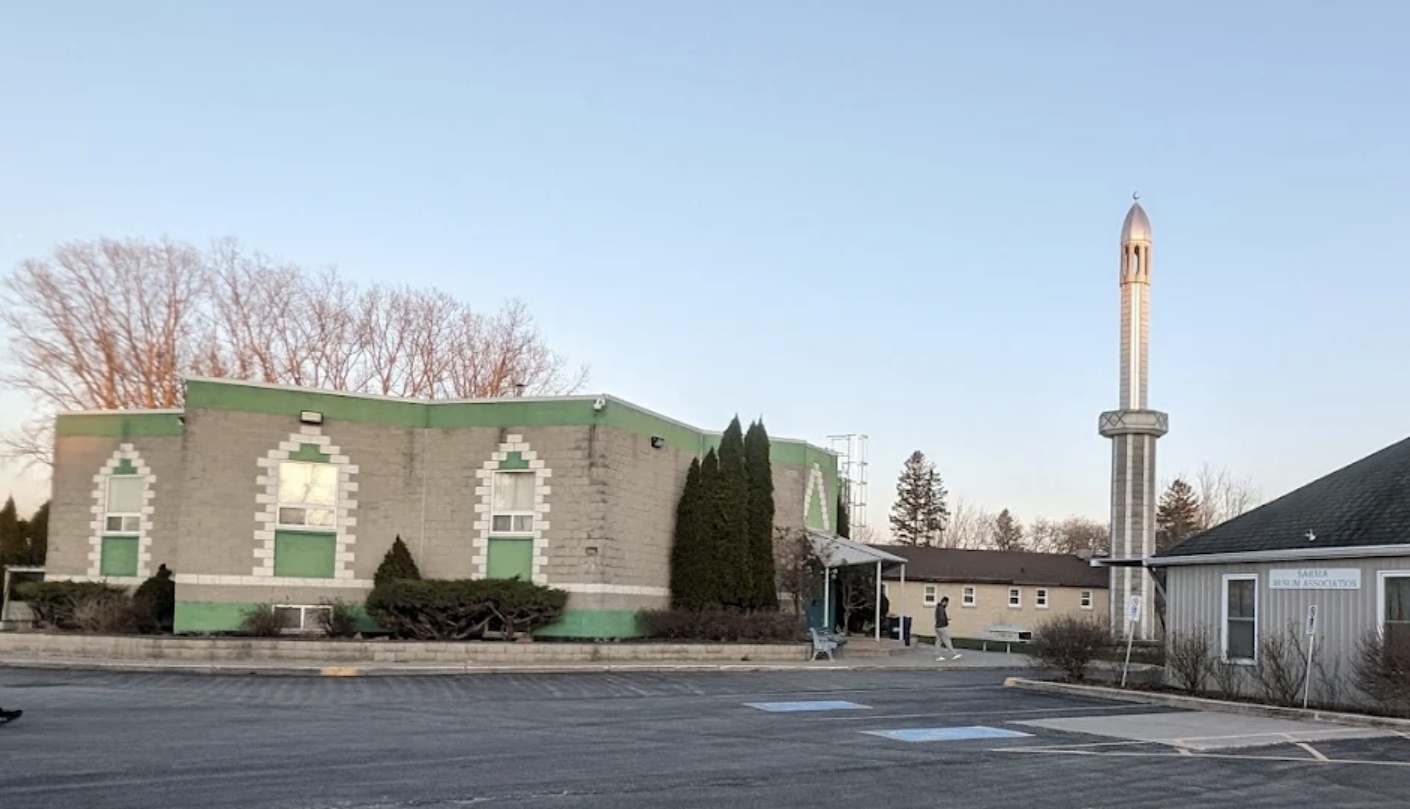
Still, when I spoke with one of the religious leaders of the mosque on London Line, who asked to be identified only as “Moe” in order to speak candidly on the sensitive topic of secularism, I found out that he has great concerns about the direction that religion, overall, seems to be taking. In our discussion, we talked about how young people’s opinions of religion will shape the future of both his place of worship and churches overall. He said that some young people with whom he has spoken consider religious people to be “backwards” in many ways: unscientific, not empirical, and superstitious. This is borne out by a study on the religious views of young people in Canada. The participants in the study said that they found religion to be “… backward, hypocritical, and oppressive.” They also used an ableist term that’s a synonym for “unintelligent.” Some of them went so far as to say that religion is colonial and “American.” The study’s participants also maintained that it was impossible to have a modern mindset and be religious, considering believers to be “primitive” and “premodern.” They reserved their strongest vitriol, however, for conservative Christian denominations.
However, when I spoke with Pastor Deve Persad of the Sarnia Evangelical Missionary Church, I found that his philosophy was egalitarian and humble rather than backwards and primitive. He’s noticed the same trend among young people as Moe, and he says that his feelings are that everyone has to build community by being humble and proceeding with the Grace of Jesus Christ. He and Moe agree, too, that the way forward involves interfaith communication and cooperation. In essence, whether someone believes in Christianity, Islam, Judaism, Sikhism, Wicca, or any of the other established religions in Canada, it’s possible to proceed with Grace to achieve a better community by finding common ground. The Grace can come from any of the deities that the people of the community worship.
Aside from doctrinal issues, another powerful factor appears to be the changing nature of community itself. For example, in previous eras, the church was the center of the social lives of the people. The church organized social events, such as dances, ice cream socials, and other “meet-and-greet” style happenings. And, there wasn’t generally another option available. In the 21st century, the internet is ubiquitous. Social media make it possible to connect with people far beyond the borders of small towns, big cities, and small urban areas like Sarnia. Quite simply, the church isn’t necessary any longer for people to have a social life. You no longer have to “marry the person in the next pew.” It’s possible to meet, interact with, fall in love with, and have relationships with people who live hundreds, if not thousands, of miles away.
Economic pressures also seem to play a role. In an economy where everything costs multiples more than it did even two years ago, people are working more. They might have to work on Sunday mornings, Saturday evenings, or on other holy days applicable to different belief systems. Or, they might have to work late into the night on the days before their services take place and not want to get up and go to services the next day.
Some of the people with whom I spoke only agreed to speak off the record. One of the ideas expressed was that people also don’t want to be responsible for tithing and/or supporting a “building.” They believe that they can be faithful to their belief systems by praying on their own even if they don’t go to the building to worship. Others might not want to “submit to control.” Some believe that allowing a religious leader, no matter the faith, to conduct the service is to give over control of one’s own life.
Moe and I discussed this as well. He referenced the “rugged individualism” of both the American and Canadian mindset. He maintained that the conspicuous consumption driven by individualism, and by some degree capitalism itself, is incompatible with Islam’s tenets on building community. Dr. Bruce Rogers-Vaughan agrees when it comes to Christianity. People seem to have moved towards a pursuit of wealth and power rather than towards Grace and an understanding of whichever deity they worship. That can keep people out of church because “they no longer need God.”
Another idea that the people with whom I spoke had in common was that many people turn to religion because they want to “ask and receive.” For whatever reason, they react to the applicable deity as “the big vending machine in the sky,” and when they don’t receive that for which they have prayed, they then become disillusioned and think, “What’s the point?”
When I spoke to the person who had left the church, who only agreed to be identified as “Susan,” which is not her real name, she told me that one of the reasons she left the church was that it was a “couples’ world.” In Susan’s church, there was absolutely nothing happening that could support single people. Her marriage had failed, and she felt ostracized because of it. In fact, the pastor at her church regularly preached that women were at fault for partner/spousal abuse. The pastor went on to say that both Susan and other women who had experienced abuse from a partner wouldn’t have been abused had they been “more pleasing to their husbands.”
She also asked for help with her mental health and was just told to pray about it. There was no recommendation for trained psychologists or psychiatrists Susan could have seen to get help. She was made to feel defective and that everything would be all right if she simply “got over it” and “prayed more.” Susan finally left because she felt alone, gossiped-about, and lied to. Susan isn’t alone in her experience.
One of the final reasons that people are leaving churches and/or belief systems is either that they’re members of the LGBTQ2IA+ community, or they’ve seen the way that members of that community and other marginalized groups are treated by both members of the religious communities, religious leaders, or both. Young people, especially, have little or no tolerance of intolerance. Karl Popper’s idea of The Paradox of Tolerance states that if a society tolerates those who are intolerant, then the entire society will eventually become intolerant. There is a possible correlation between the opinions of young people regarding religion and not tolerating intolerance towards LGBTQ2IA+ people and other marginalized groups, but further research is needed to reinforce that possible correlation.


