
After more than 30 years in the industry, Greg continues to navigate rising costs, fierce competition, and shifting customer habits with persistence and pride.
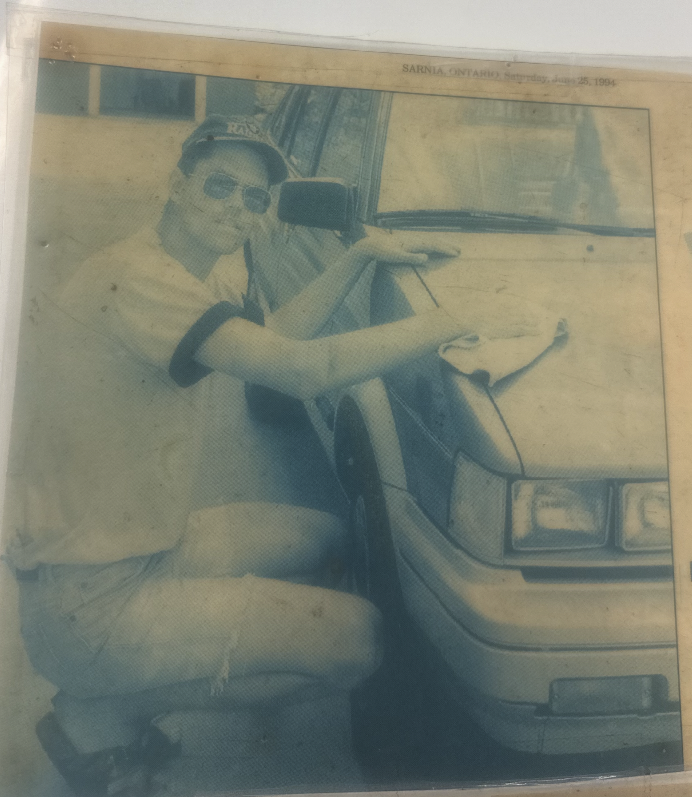
When Greg first started detailing cars as a teenager, he was working out of his father’s driveway.
At 15 and 16 years old, he cleaned vehicles wherever he could, including at his high school, until administrators realized he was being paid for the work. He laughs now when he looks back on it, remembering how he would finish his assignments just to get back to what he really loved: working with his hands.
“I wasn’t very good at school,” he said. “I was more hands-on. I’d get what I had to get done, then I’d go clean teachers’ cars.”
That early hustle turned into a lifelong career.
More than three decades later, Greg Honke is the owner of Greg’s Auto Detailing, a fixture in Sarnia’s automotive service community. He has been in business for roughly 28 years and working in the industry for more than 34. His path from driveway detailing to running a full-service shop reflects both his determination and the changing realities of small business ownership in the city.

Before opening his own shop around 1999, Greg worked at several detailing businesses in the area, gaining experience and learning the trade. Eventually, he decided it was time to build something of his own.
Over the years, his business has operated in multiple locations, from Hardcore Auto Tech near the courthouse, to Village Auto Sales, then to Automax, and eventually to his current site near Tim Hortons on London Road. He has been at his present location for 13 years.
“I like where I’m at,” he said. “It’s a great spot. Being near Tim Hortons is advertising in itself.”
Each move brought new challenges, new customers, and new costs. Staying in one place long term, he says, has helped him build relationships and maintain a steady client base in a competitive market.

Auto detailing has become increasingly competitive in recent years. Social media and online marketplaces have made it easy for individuals to advertise services from their driveways or offer mobile detailing without overhead costs.
“In the summertime, you get fly-by-nighters,” Greg said. “Backyard guys, students doing it on Facebook. Opening a business that’s not really a business.”
He estimates that in some years, as many as 20 informal operators were competing for the same customers.
Unlike licensed shops, many of these operators do not carry insurance, pay commercial rent, or hold business licences. While their prices are often lower, Greg says the playing field is not level.
“We’re paying rent, taxes, insurance,” he said. “A lot of these places don’t have any of that.”
In an era where many customers look for the cheapest option, established businesses often struggle to explain the value behind professional pricing.
“People go for the cheap price,” he said. “They pay cash. No tax. That’s hard to compete with.”
Like many small business owners, Greg has watched his operating costs steadily climb.
Supplies, utilities, insurance, rent, and equipment have all increased over time. Even basic materials that once cost a few dollars now cost nearly double.
“I just bought paint for $14.99,” he said. “It used to be $6.99 just last year.”
While individual increases may seem small, they add up quickly in a labour-intensive business.
A full detail can take an entire day, especially when polishing, cleaning interiors, and restoring heavily used vehicles. Larger trucks and older cars often require even more time.
“For me to do a full detail, just to polish and clean everything properly, that’s all day,” he said.
He charges based on time, condition, and vehicle size, rather than the customer’s income or the brand of car.
“A Porsche owner pays the same as someone with an SUV,” he said. “I charge for what I have to do.”
His hourly rate reflects not only his skill, but also the costs of running a legitimate business.
“You’ve got to pay employees. You’ve got to pay yourself. You’ve got to pay the bills. It all adds up.”

For Greg, detailing is not simply washing a car. It is a craft.
Modern vehicles require careful handling, especially when it comes to paint correction, polishing, and ceramic coatings. Mistakes can cause permanent damage.
He regularly performs multi-step polishing processes to remove fine scratches and protect finishes from salt, sand, and environmental wear.
“Even a brand new vehicle can have scratches sometimes,” he said. “You’ve got to do it right.”
He also spends time educating customers, explaining what their vehicle needs and how long it will take.
“There’s so many little things people don’t think about. I like to see the vehicle, talk to the customer, explain what I’m doing,” he said. “That’s how we do it here.”
Like many service businesses, detailing is affected by weather and seasons.
Winter slows business as snow, ice, and road salt make it harder for customers to justify a full clean. Summer brings more volume, but also more competition.
Some of the most profitable work now comes from ceramic coatings and high-end paint protection, which appeal to customers looking to preserve new vehicles.
“That’s where the money is,” he said.
Still, even these services depend on consumer confidence and discretionary spending, both of which have been under pressure in recent years.
Location has always mattered for small businesses in Sarnia.
Greg has watched areas along Confederation Street and other commercial corridors undergo redevelopment, pushing rents higher and forcing some long-standing businesses to relocate or close.
While he has maintained a positive relationship with his landlord, his rent has still increased over time.
Security is another concern. Like many shop owners, he has invested in cameras and monitoring after seeing theft and vandalism affect neighbouring businesses.
“You can’t leave anything outside,” he said. “Even flower baskets get taken.”
These pressures add another layer of stress to already tight margins.
Over the years, Greg has detailed everything from everyday family vehicles to rare and high-end sports cars, including Ferraris and vintage Porsches.
One of his most memorable jobs involved a Ferrari similar to the one featured in the movie Bad Boys.
Despite the prestige of such vehicles, he treats every job the same.
“I don’t charge more just because it’s a luxury car,” he said.
That consistency has helped him build trust and long-term relationships with customers who value quality over shortcuts.

After more than three decades in the industry, Greg admits there are difficult days.
He is now in his early 50s. Winter work is physically demanding. Competition is fierce. Expenses continue to rise.
“There are days you’re out there with snow and ice on the car,” he said. “But I still come in and do what I have to do.”
What keeps him going is pride in his work and loyalty to his customers. Greg now shares the day-to-day work of the business with his partner, Theresa Greenbird, whose encouragement and dedication have helped sustain both the shop and his own resilience.
“I love this business,” he said. “I don’t want to see it go down.”
He also takes pride in helping others find stability through work, offering opportunities to people who are trying to find work.
“I’ve always wanted to work hard for my money,” he said. “That’s just how I’m wired.”

Greg’s story reflects the broader experience of many small business owners in Sarnia.
They face rising costs, informal competition, changing consumer habits, and economic uncertainty. They balance passion with practicality, craftsmanship with cash flow.
Yet many continue, driven by pride, community connections, and a belief in the value of doing things properly.
For customers, Greg hopes his story offers perspective on what goes into professional service.
“When you get it done right, you’re protecting your investment,” he said. “You’re getting your car back almost brand new.”
After more than 30 years, that commitment remains at the heart of his work.
From a teenager with a hose in his father’s driveway to a long-standing local business owner, Greg’s journey is a reminder that behind every small storefront is a lifetime of effort, risk, and resilience.


