
Oct22
Ontario’s tick problem is getting bigger, experts warn
A new Public Health Ontario report warns that climate change is helping ticks spread farther across Ontario.
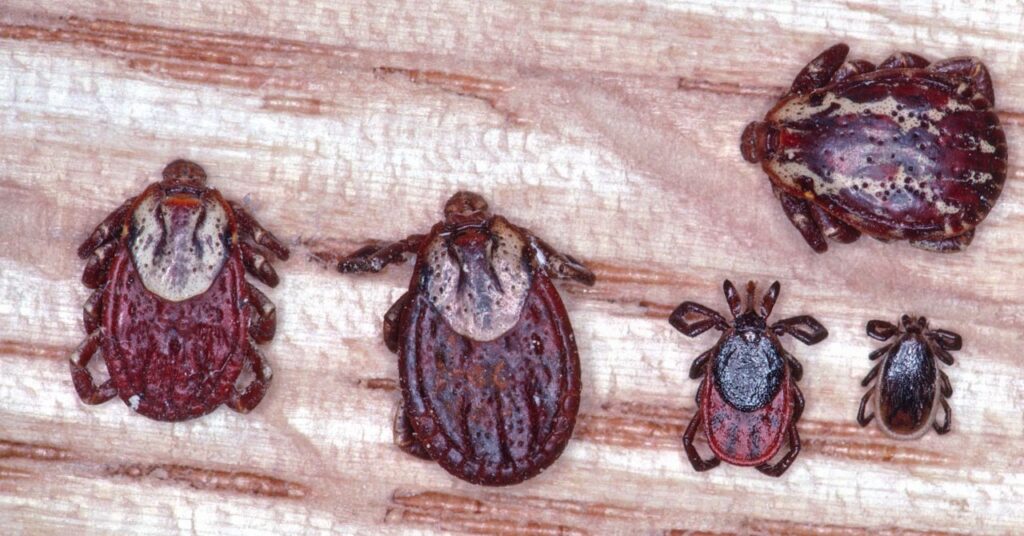
A new report from Public Health Ontario says ticks are continuing to expand across Ontario, bringing growing concerns about Lyme disease and other tick-borne illnesses.
The 2026 report, The Ticks of Ontario, identified 43 tick species recorded in the province, including 12 established species, 17 adventive species and 14 travel-related species.
Public Health Ontario says climate change, travel and shifting landscapes are helping some tick populations spread northward into areas where they were once uncommon.
The blacklegged tick, also known as the deer tick, remains the biggest public health concern in Ontario because it is the primary carrier of Lyme disease. The report notes blacklegged ticks now account for approximately 55 per cent of all ticks submitted through Ontario’s passive surveillance system. American dog ticks account for another 36 per cent.
Researchers said Lyme disease was once considered rare in Ontario but has become the province’s most commonly reported vector-borne disease.
The report also warns about the lone star tick, a species commonly found in parts of the United States that is increasingly being detected in Ontario through travellers and migratory birds. While it is not considered established in Ontario, experts say it has the potential to expand into the province in the future.
Lone star ticks are associated with ehrlichiosis and have also been linked to alpha-gal syndrome, an allergy that can trigger reactions to red meat.
Public Health Ontario says Lambton County was among the public health regions with the lowest number of established tick species in the province, alongside Chatham-Kent and Oxford Elgin-St. Thomas.
Still, officials say tick populations and tick-borne disease risks continue to evolve across Ontario.
The report highlights that migratory birds play a major role in bringing ticks into Canada, with at least 18 of Ontario’s reported tick species associated with bird migration.
Experts recommend people take precautions outdoors during warmer months, including wearing long clothing, checking for ticks after spending time in grassy or wooded areas, and removing ticks promptly if found attached to the skin.
The report also notes that the Asian longhorned tick, a species now established in several American states, could eventually establish itself in southern Ontario because of suitable climate and habitat conditions.
Public Health Ontario says ongoing surveillance and monitoring will be critical as Ontario’s tick landscape continues to change.
More to read
 Sarnians4Palestine asks candidates how they would support First Nations consultation on pipeline
 Ontario Command takes control of Sarnia Legion Branch 62
 Sarnia and Point Edward receive $482,274 in casino revenue payments
 W.W.G.D? (What Would Gladu Do?) By SPROINK!
 PopTechnique’s “Feel the Vibe” is a Sarnia collaboration in public
Events
Oct22
Oct22
Oct22
Oct22
Music Night at Black Gold Brewery
Thu, Oct 22 · 7:00 pm
Black Gold Brewery 395 Fletcher St. Petrolia, ON


