Oct22
OPINION: Catch the Ace needs a major safety plan
The Legion’s wildly successful weekly draw has brought new life downtown, but the crowds now demand a serious conversation about permits, safety and public space.
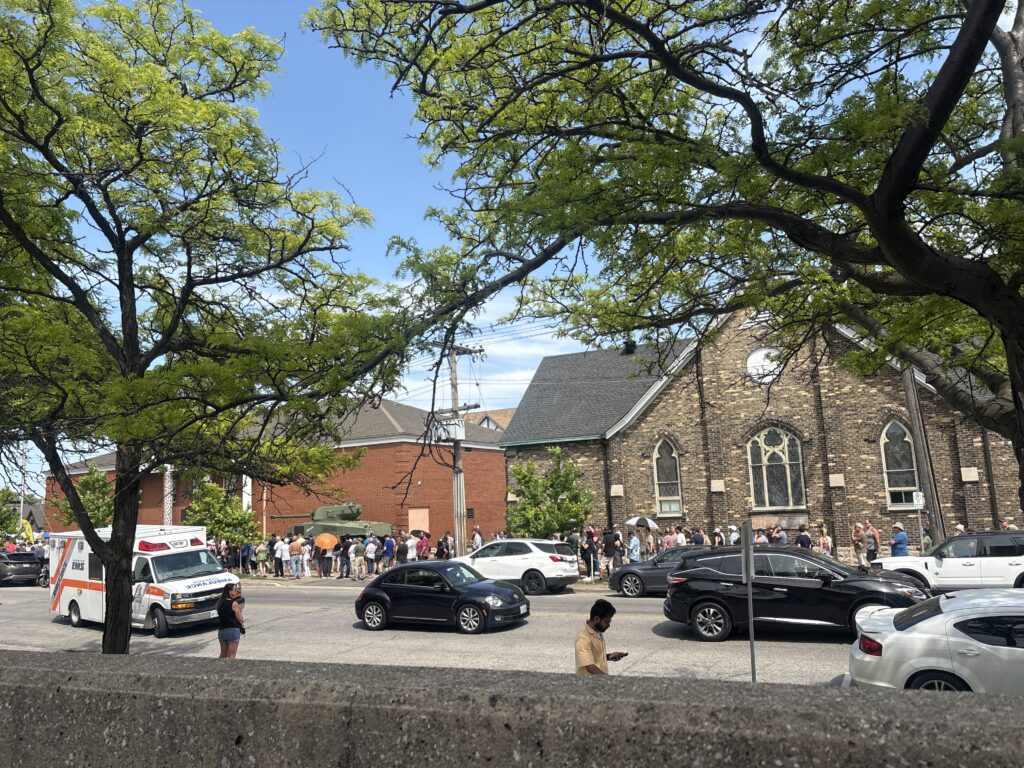
The Sarnia Legion’s Catch the Ace draw has become one of the most surprising downtown success stories in recent memory. What started as a small weekly charitable draw has grown into a major recurring Thursday event, bringing people into the core, creating excitement, supporting community causes, and giving local food vendors, musicians and nearby businesses a level of attention that downtown Sarnia does not always get.
What an achievement! The Legion has clearly tapped into something people want to be part of. There is excitement in the lineups, hope in the draw, and a genuine community feeling around the event. Local businesses like Giresi’s, Beanzz and Yogi’s Food Truck have all been part of the atmosphere, and the sight of people gathering downtown in such large numbers is, in many ways, exactly the kind of energy people often say they want to see in the city.
The problem is that it has become too large to keep treating it like a simple indoor draw.
At this point, the Catch the Ace event is no longer contained within the Legion building at 286 Front Street North. The impact stretches well beyond the branch itself, onto sidewalks, nearby streets, parking areas, neighbouring businesses and residential spaces. When crowds are wrapping around the block and extending far onto Front, Lochiel, and Christina Street, the event has effectively become a huge public-space event, whether anyone has formally called it that or not.

Almost any other event drawing this many people into a concentrated downtown area would be expected to have permits, crowd plans, washroom access, medical planning, street-level security measures, accessibility considerations and a clear understanding of how surrounding streets and businesses will be affected. When events such as Beats on the Street, Art Walk, Ribfest, Borderfest and other crowd-drawing gatherings take over public space, they are expected to plan and pay for the realities that come with that. It is hard to see why this should not be part of the same conversation.
There are also real accessibility concerns. If people with disabilities have limited options for safely moving along the street because sidewalks are crowded or blocked, that needs to be addressed directly. Accessibility cannot be treated as an inconvenience or a side issue. Public excitement should not come at the cost of making downtown harder to navigate for people who already face barriers. If a sidewalk cannot be accessed at all, because a lineup is in the way, a permit needs to be granted for it.
The parking situation is another sign that the event has outgrown casual management. Nearby lots and streets are being overwhelmed, and tensions are rising. When people are circling the area, parking near residential buildings, blocking access, or competing for limited space, the conflict is not surprising. It is the predictable result of a major recurring event without a parking and traffic plan that matches its actual size. Even with the new off-site parking, it is quite simply not enough.
The same is true for businesses. Many downtown businesses are benefiting from the crowds, and that is a good thing. Others are dealing with lost parking, reduced access, crowding near their entrances, or customers who avoid the area altogether on draw days. Both things can be true at once. The event can be good for downtown and still create problems for some of the people trying to operate there.
Not all local businesses are bars, restaurants or food vendors that can easily benefit from a large crowd outside their doors. Some rely on appointments, regular customer parking, quiet storefront access or a predictable flow of people in and out. A packed sidewalk may be good for one business while making another harder to reach. That is the reality of downtown: the same crowd can create opportunity for some and disruption for others.
Sarnia has been willing to talk about public-space impacts in other contexts, including Rainbow Park. People raised concerns then about safety, business impacts, downtown usability, disorder and public use of shared spaces. Those concerns cannot only matter when the crowd is unpopular. If the city is going to take those issues seriously in one situation, it has to be willing to take them seriously here too.
The Legion draw is not a Rainbow Park situation by any means, and it should not be treated as one. The event is organized, popular, charitable, rooted in a known location and supported by volunteers and community goodwill. Those are major strengths. They also make it easier to build a proper safety and permitting structure around it. The principles of public disruption are still the same, and in some ways the pressure on downtown is even greater because of the sheer volume of people arriving week after week.
The upcoming summer months make this more urgent. People are lining up for hours, sometimes from early in the day, and as temperatures rise the risks become more serious. Heat, dehydration, fatigue and lack of shade are not theoretical concerns when large numbers of people are waiting outside for extended periods of time. There should be shaded areas, water access, cooling options, clear line management and a first aid plan. If people are being drawn into a line for several hours, the conditions of that line become part of the event’s responsibility.
Washrooms also need to be part of the discussion. Reports of people drinking in line, leaving intoxicated, wandering through nearby streets or urinating publicly are not just minor annoyances for neighbours and businesses. They are signs that the event needs better infrastructure and supervision. Any other large outdoor event would be expected to think about washrooms, alcohol-related risks, cleanup and crowd behaviour. This is no different.
The reported increase in health emergencies and ambulance calls connected to the crowds should also be taken seriously before a preventable emergency becomes the thing that finally forces action. On May 14th, two ambulances were seen picking up people who had a medical emergencies in line. Large events often use hired medical professionals, paramedic teams or dedicated first aid stations because they understand that crowd size changes the risk. A weekly event drawing this many people can no longer rely luck, goodwill and volunteers alone.
That brings up another issue: volunteers. The Legion volunteers deserve enormous credit. They are clearly putting in long hours before, during and after the draw. People are reportedly helping with tickets, stocking, cleaning, setup, line control, tables and teardown across several days. That kind of effort says a lot about the strength of the organization and the people behind it.
It also raises a fair question about whether the event has reached the point where some positions should be paid. When an event becomes this large, generates this much activity and requires this much labour, it is reasonable to ask whether professional staffing should become part of the model. Volunteers can still be valued and involved, but relying too heavily on unpaid labour at this scale risks burning people out and blurring the line between community service and work that should be compensated. What a unique position the Legion is in, to be able to employ a few people within the city with its million dollar profits.
The recent Parkhill winner shows how far the draw’s reach has grown. A $145,000 win is exciting, and the winner should be congratulated. It also confirms that this is no longer just a neighbourhood event. People are travelling into Sarnia for it. The event is attracting regional attention, and that adds another layer of responsibility for the Legion and the city.
Nobody should want this to fail. The Legion has created something rare: a recurring event that people actually want to attend, that raises money, that brings attention downtown, and that gives the community a reason to gather. That is exactly why it deserves proper planning. The goal should be to protect the event, not pretend it is smaller than it is.
A proper plan should include city permits, crowd logistics, sidewalk access, emergency routes, traffic and parking plans, accessible pathways, washrooms, garbage management, alcohol-related safety measures, shade, water, cooling areas, first aid, paid staffing where appropriate, security spanning several blocks, and communication with nearby businesses and residents. The plan should match the size of the event as it exists now, not the size it may have been when it first started.
The City of Sarnia has to be a part of this conversation immediately. This event grew quickly, and that is not anyone’s fault. But once a new problem exists, pretending it is still manageable under old conditions is no longer good enough.

The Legion has done something impressive for downtown Sarnia. It has brought people out, supported charity, created excitement and reminded the city of the power of community organizations. The next step is to make sure the event is safe, accessible, fair to surrounding businesses and sustainable for the people running it.
This event has become bigger than its boots, quickly. What a joy it is to live downtown and see this kind of vibrancy on our streets. But joy does not cancel out liability. When thousands of people are lining public streets for hours without a full safety plan, clear crowd control, washroom access, medical support, traffic planning and accessibility protections, the risk is no longer theoretical.
The danger is that everyone can see the problem coming, but no one wants to be the person who says it out loud. That is exactly how preventable emergencies happen. A packed sidewalk, a medical episode in the heat, a blocked ambulance route, an intoxicated person stepping into traffic, or a mobility aid user forced off a safe path could turn this success story into a crisis in seconds.
The Legion has created something remarkable, and the city should want it to continue. But continuing it safely means treating it like the large public event it has become. If Sarnia waits until someone is seriously hurt before requiring permits, crowd planning and professional safety measures, the failure will not be a lack of hindsight. We already have the foresight. Everyone can see the risks. Something needs to be done now.
More to read
 Sarnians4Palestine asks candidates how they would support First Nations consultation on pipeline
 Ontario Command takes control of Sarnia Legion Branch 62
 Sarnia and Point Edward receive $482,274 in casino revenue payments
 W.W.G.D? (What Would Gladu Do?) By SPROINK!
 Vote for Mario Fazio for City/County Council
Events
Oct22
Sarnia Police Service Board open meeting
Thu, Oct 22 · 9:00 am
Sarnia Police Headquarters – Community Room
Oct22
Oct22
EarlyON-Nature Park Program
Thu, Oct 22 · 9:30 am
Bridgeview Park 4241-4299 Petrolia Line Petrolia, ON
Oct22