Oct22
Sarnia should not mistake a pipeline announcement for a future
Northern Shield may be a serious proposal, but it is not yet a real pipeline. Before Sarnia-Lambton treats it as inevitable, the project still needs a builder, price tag, route, financing, approvals, consultation and a clear answer to what problem it is meant to solve.
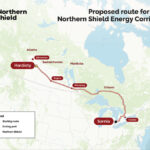
A map can do a lot of political work before a shovel ever touches the ground.
That is worth remembering after Ontario Premier Doug Ford and Alberta Premier Danielle Smith unveiled the proposed route for the Northern Shield Energy Corridor, a 3,300-kilometre crude oil pipeline that would run from Hardisty, Alberta, to Sarnia.
For Sarnia-Lambton, the announcement landed in familiar territory. The proposed endpoint is a city built around refineries, pipelines, storage, industrial contractors, skilled trades and generations of workers tied to the energy sector. Supporters say the project would strengthen Canadian energy security, reduce dependence on American infrastructure, protect refinery jobs and reinforce Sarnia-Lambton’s place in the national energy economy.
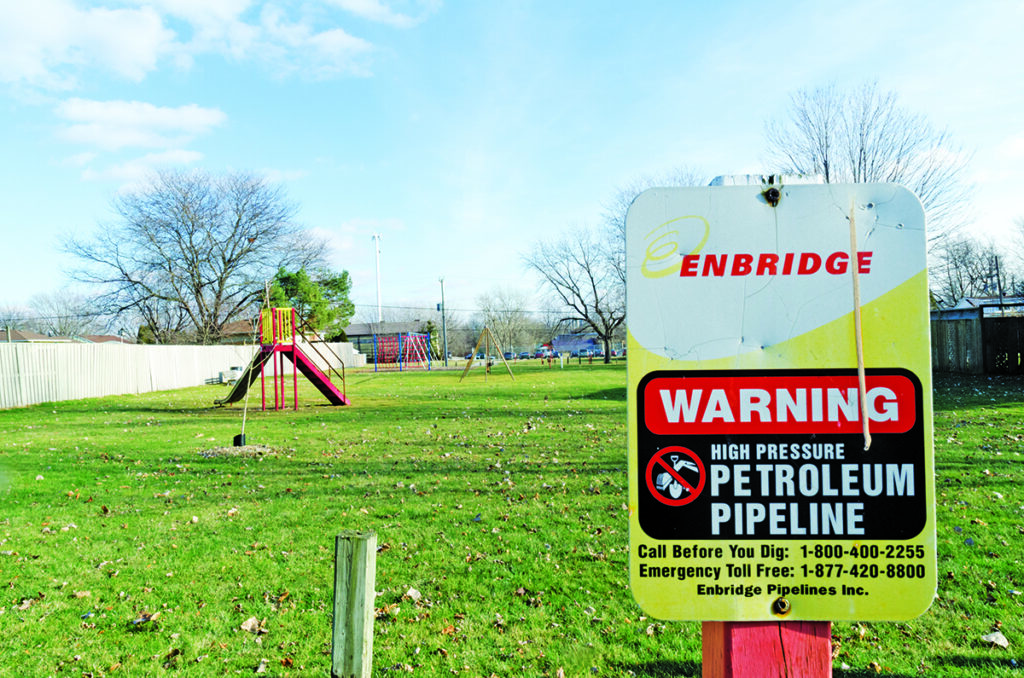
It is not hard to understand the excitement. The proposal is for a line that could initially move about 500,000 barrels of oil per day, with possible expansion to 800,000. It is being pitched partly as a way to reduce vulnerability around Line 5, the Enbridge pipeline that brings oil and natural gas liquids into Ontario through the United States and has faced years of legal and political pressure in Michigan. A fully Canadian route to Sarnia is an easy idea to sell here.
But Northern Shield is not a pipeline yet. It is a proposal, a route map and a feasibility study. Right now, the project has no public price tag, no named builder, no completed feasibility study, no final route, no regulatory approval and no completed Indigenous consultation. Those are not small missing details. They are the difference between a political announcement and an actual project.
This does not mean Northern Shield cannot happen. It does mean the public should be careful about treating it as though it already has.
Canada has seen this pattern before. Major pipeline proposals often arrive with national language, economic promises and declarations of inevitability. Then they enter the harder world of financing, permitting, court challenges, provincial politics, Indigenous rights, environmental review, market shifts and public opposition.
Energy East was once presented as a major nation-building project. It was supposed to move western crude to eastern refineries and tidewater. It had support from parts of labour, industry and politics. Then it was cancelled in 2017 after years of regulatory, political and economic complications. Northern Gateway was approved, fought, overturned and terminated. Keystone XL was revived and killed across different American administrations. Trans Mountain was eventually completed, but only after the federal government bought the project and carried it through years of delays and massive cost escalation.
The lesson is not that pipelines never happen. The lesson is that pipeline announcements are easy compared with pipelines.
Northern Shield would still have to cross multiple provinces, attract a serious private-sector proponent, secure financing, survive environmental review and answer basic questions about what problem it is actually meant to solve. If the project is about energy security for Ontario, the scale of the line needs to make sense beside Ontario’s refining demand. If it is about exports, the politics become different. If it is about avoiding the risk of Line 5, Canadians deserve to know whether building an entirely new 3,300-kilometre pipeline is a proportionate response to that vulnerability.
Those questions should come before celebration, not after.
Consultation is another major issue. The proposed endpoint is being described as Sarnia, but Sarnia’s industrial geography is not neutral. The pipeline would terminate in the same industrial landscape surrounding Aamjiwnaang First Nation, a community that has already spent decades carrying the health, environmental and political burden of Chemical Valley.
Aamjiwnaang leadership has warned that the community is living with cumulative industrial impacts and has called for early Crown engagement on the proposed pipeline. That cannot be treated as a box to check once premiers and local politicians are finished celebrating the map. If Northern Shield is serious, consultation cannot be an afterthought. It has to shape whether the project proceeds, how it proceeds and what obligations governments and industry owe to the communities most directly affected.
That is the part missing from much of the early excitement. A pipeline may bring work. It may strengthen existing refineries. It may provide another route for Canadian crude. It may reduce one vulnerability in the energy system. Those arguments deserve to be taken seriously. But the announcement itself does none of that.
It does not build the line. It does not secure the financing. It does not complete the consultation. It does not answer the environmental questions. It does not resolve Aamjiwnaang’s concerns. It does not prove the route is viable, the economics work or the public costs are justified.
That is why the response should be measured. Sarnia-Lambton does not need to dismiss the pipeline to ask harder questions about it. A project this large should have to earn public confidence before it is treated as inevitable.
If the project is real, show the cost. Show the builder. Show the financing. Show the final route. Show the refinery demand. Show the export plan. Show the risk assessment. Show what public money, if any, will be used. Show what jobs would actually be created here, for how long, and under what conditions. Most importantly, show what Aamjiwnaang says, not merely what Queen’s Park says about Aamjiwnaang.
Until then, Northern Shield should be treated for what it is: a serious proposal, not a settled future. It may one day become a real project. It may also become another entry in Canada’s long list of proposed pipelines that generated headlines, speeches and expectations before disappearing into the harder realities of cost, consent, regulation and markets.
The danger is not that local leaders are interested in possible jobs or investment. They should be. The danger is treating an announcement as proof before the proposal has answered the basic questions that determine whether it can, or should, be built.
Northern Shield may be worth studying. It may be worth debating. It may even be worth supporting if the details eventually justify the confidence now being placed in it. But right now, it is still only a pipeline announcement.
Sarnia should not mistake that for a pipeline.
More to read
 Sarnians4Palestine asks candidates how they would support First Nations consultation on pipeline
 Ontario Command takes control of Sarnia Legion Branch 62
 Sarnia and Point Edward receive $482,274 in casino revenue payments
 W.W.G.D? (What Would Gladu Do?) By SPROINK!
 Vote for Mario Fazio for City/County Council
Events
Oct22
Oct22
Oct22
Oct22
Music Night at Black Gold Brewery
Thu, Oct 22 · 7:00 pm
Black Gold Brewery 395 Fletcher St. Petrolia, ON