
From debates over climate change and vaccines to conspiracies and political ideology, it’s common to wonder: Why do some individuals seem completely incapable of changing their minds, no matter the facts?
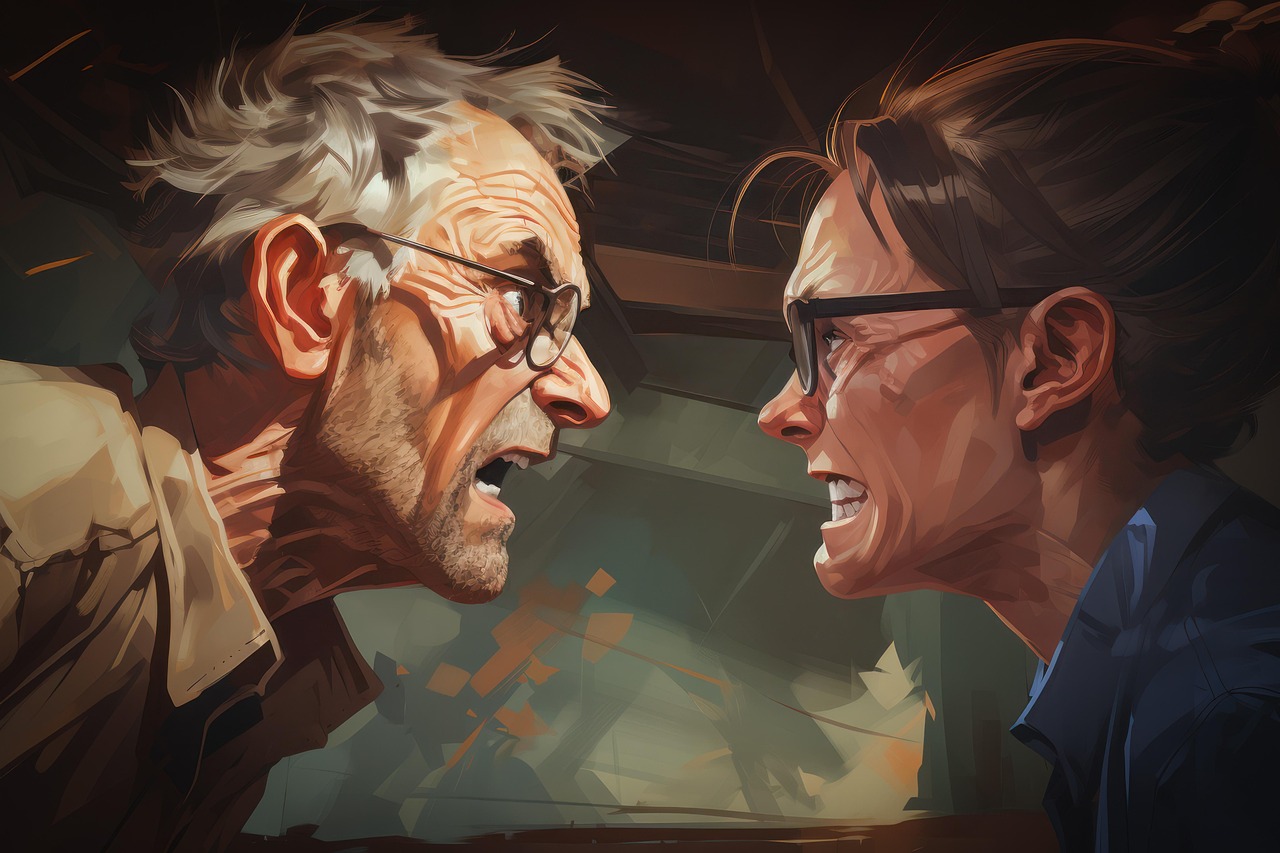
You might think they just need more information, a clearer explanation, or a better chart. But here's the truth: The answer lies not in intelligence or education, but in the deeply emotional and social nature of human cognition.
Contrary to popular belief, most opinions aren’t formed through logic. They’re constructed, often unconsciously, through emotional experience, social identity, and psychological bias. And once formed, they become surprisingly resistant to change.
The idea that humans are rational thinkers who carefully weigh evidence is largely a myth. Modern psychology tells a different story. We’re emotional creatures pretending to be rational ones.
According to Jonathan Haidt, a social psychologist and author of The Righteous Mind, reasoning often acts like a lawyer defending a client, not a judge evaluating the truth. In this analogy, our emotional instincts (the "client") make the first call, and our reasoning skills (the "lawyer") come afterward to justify that position.
This phenomenon is known as motivated reasoning. When new information aligns with our beliefs, we accept it easily. When it contradicts those beliefs, we scrutinize it, dismiss it, or find reasons to discredit it, often without realizing we’re doing it. To understand why people cling to beliefs in the face of evidence, we must consider how humans evolved.
Survival in early human history was heavily dependent on group cohesion. Those who aligned with their social group were more likely to be protected, find mates, and survive. Those who strayed from group norms risked ostracization, a potentially deadly outcome in small tribal societies. This evolutionary pressure hardwired into us a strong tendency toward group conformity. In modern terms, this means that changing your mind about a controversial issue isn’t just about updating beliefs; it can mean risking alienation from your social circle.
Back in the day, getting kicked out of your tribe could get you killed. So people learned to fit in, to agree, and to play along. That old habit never left us. Now, we still follow the group, we still fear being the odd one out. Even if the facts don’t line up.
Say your friends think vaccines are dangerous. Are you really going to argue with them at dinner? Probably not.
People often defend their beliefs not because they’ve reasoned them out, but because those beliefs tie them to their identity, their community, and their sense of self-worth.
Strong beliefs feel personal. They can become part of your identity. So when someone questions your belief, it feels like they’re questioning you. That is why people get angry when politics come up. Or why they shut down when science says something uncomfortable. It’s not about the facts, it’s about belonging, it’s about being right, it’s about not being alone.
You tend to hang out with people who agree with you. Everyone does it. That creates an echo chamber. Same ideas. Over and over. It’s like standing in a hall of mirrors. You just keep seeing yourself. After a while, it starts to feel like everyone agrees with you. You forget there are other views. This happens with politics, diets, parenting, and even physics.
In today's hyperconnected world, these ancient tribal instincts are amplified by technology and social media. People with strong ideological leanings tend to self-select into communities that share and reinforce their worldview. This leads to confirmation bias, the tendency to seek, interpret, and remember information in a way that confirms existing beliefs. Over time, repeated exposure to the same narratives creates an echo chamber, a closed information loop where dissenting voices are filtered out or ridiculed.
In such an environment, the illusion of consensus becomes strong. If “everyone you know” agrees with you, then the belief must be correct, right? This warped perception can affect even well-educated individuals. It leads to a skewed understanding of objective reality, including topics grounded in math and physics. We see this in science denial communities, whether it's flat Earth proponents, climate change skeptics, or alternative medicine advocates, where flawed or cherry-picked interpretations of scientific data are reinforced socially rather than intellectually challenged.
Switching sides is hard. It causes cognitive dissonance, that weird stress when your old beliefs and new facts clash. It feels uncomfortable like wearing shoes on the wrong feet. Plus, it might mean leaving a group you care about. Or admitting you were wrong. Nobody likes that. So what do we do? We double down, we argue, we scroll past the truth.
Changing one's mind in the face of evidence often comes with a heavy psychological and social cost. It can create cognitive dissonance, a state of internal discomfort caused by holding conflicting beliefs. It may lead to an identity threat, especially if the belief is tied to religion, politics, or cultural values. And it risks social exclusion if one’s peers continue to hold the original belief. Because of these costs, it’s often easier, emotionally and socially, to rationalize the existing position than to risk upheaval.
Stay Open. Stay Curious. Here’s the upside. You can train your brain to be a little more flexible. Start by asking questions. Talk to people who disagree with you. Read things outside your bubble, no pressure to flip your views overnight, just give yourself a little space to explore.
Psychologists refer to epistemic humility as the willingness to admit one’s knowledge is limited and to revise beliefs based on new evidence. But this trait is rare. It requires a stable sense of self that isn’t dependent on always being “right,” and a support system that allows room for dissent and complexity. In polarized environments, humility is perceived as weakness, not strength. That further entrenches the divide and reduces the likelihood of genuine dialogue.
Humans didn’t evolve to seek truth; we evolved to survive in groups. That legacy shapes how we think, feel, and argue, even in modern debates over science and policy. Understanding this can help us approach difficult conversations with more empathy and realistic expectations. People aren’t stupid for resisting evidence; they’re human. But recognizing these tendencies is the first step toward constructive dialogue, better education, and healthier discourse.
Because if we want facts to matter, we have to understand the forces that make them so easy to ignore.


