
When you talk with Lou Sprenger, you quickly get the sense that his life has been shaped by two constants: hard work and an instinctive pull toward creativity. Lou was […]
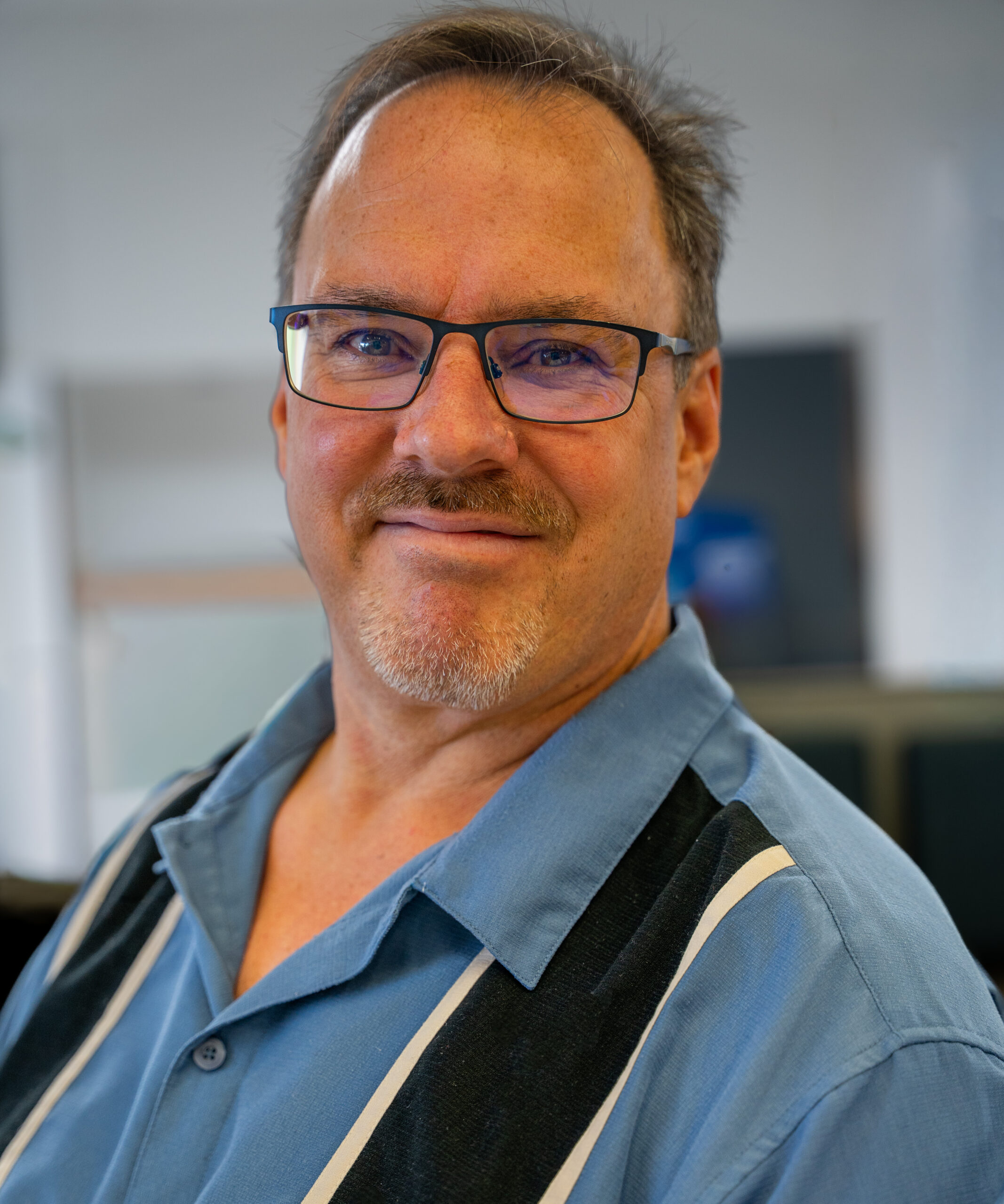
When you talk with Lou Sprenger, you quickly get the sense that his life has been shaped by two constants: hard work and an instinctive pull toward creativity. Lou was born in Kitchener, but in his early years zig-zagged across Ontario before his family eventually settled in Sarnia—the place that would become home in every sense.
He went to George Perry School and later to Northern Collegiate, where art classes came naturally to him. After high school, he chose a path that kept him outdoors: the Parks Operations and Services program at Lambton College.
“It had basically anything to do with landscaping or gardening, tree climbing and turf management,” he recalls. “That sort of thing.”
The program fit him well. Lou wasn’t the type to sit still, and he loved the satisfaction of seeing his work take shape in the real world. After graduating, he spent ten years with DeGroot’s Nurseries—ten years of learning how to “get it done and fast and right.”
Those lessons stuck with him when he eventually stepped out on his own. For 23 years, Lou ran a small landscaping business built on grit, sweat, and close relationships with clients.
“I was never the person who wanted to be as big as DeGroot’s,” he says. “I’m more of a person. I liked hiring one or two people and knowing exactly what we were doing. It wasn’t paperwork first. I was always a doer.”
But beneath the soil and the garden tools, something else was growing—something that had been part of Lou since he was a teenager carrying his first film camera. Creativity had always come easily to him, and design work in landscaping only deepened that instinct.
Then came the year 2000, and with it, a 3.2-megapixel Canon digital camera.
“I had kind of let go of photography for a while,” he admits. “But that first digital camera? That was the turning point.”
Not long after, he saw a call for volunteer photographers for Sarnia’s Celebration of Lights. He put his name forward. That one step opened a new door: he began sharing his photographs with Tourism Sarnia-Lambton, who used them for magazines and online features. They were always looking for images that reflected the community, and Lou had a way of capturing moments that felt both familiar and special.
From there, his volunteering expanded. He got involved with Cogeco’s “Your TV,” operating video cameras at hockey games, community events, political gatherings—wherever people came together. Over time, he became the one responsible for providing the images used in the station’s slideshows: scenes of Sarnia-Lambton’s people, events, and changing seasons.
It’s a role he still pours himself into.
“I put about 30 to 40 hours a month into editing and putting the images together,” he says. “Fifteen years ago, it was one or two events. Now it’s two, three, six, eight events. I try to promote individuals, smaller groups. If it’s a first-time event or a little group raising money for charity, I want to help promote them.”
For years, Lou would quietly weave his way through crowds at events, blending in as he captured the moments unfolding around him. These days, things look a little different. He now uses a mobility scooter, and he laughs when he says, “I don’t hide in a crowd anymore.”
The scooter became necessary because of Spastic Paraplegia Type 4 (SPG4), a hereditary condition that causes progressive stiffness and weakness in the legs. “My father had it, and my grandmother had it, and her grandmother had it,” Lou says. It wasn’t until recent years, with advances in DNA testing, that clear diagnoses became possible. Before that, the condition was often labelled as Little’s Disease.
As the symptoms progressed, landscaping became too painful. Eventually, the business he built over decades faded away.
“It just got to be too much,” he says quietly. “Too painful.”
Letting go was difficult. Work had always been part of who he was. The idea of retirement scared him. “I thought, ‘God, I’m going to sit at home and do nothing.’”
But that isn’t how the story ended.
Lou didn’t stop working—he simply shifted his focus. Photography became more than a hobby or a volunteer role. It became his way of staying engaged, staying useful, and staying present in the community he loves.
“Now,” he says with a smile, “I’m sitting at home doing something.”
If you’ve attended events in Sarnia, there’s a good chance you’ve seen Lou—either in person or through the photos he shares. His images show the city at its best: the small victories, the neighbourhood gatherings, the faces of people who might otherwise go unnoticed. He documents the life of this community with patience, care, and an unmistakable sense of pride.
In every frame, there is an intention. In every project, hours of unseen labour. And in every conversation with him, a genuine love for the people who make Sarnia what it is.
Lou Sprenger may navigate the world differently now, but his commitment to capturing its beauty hasn’t dimmed for a moment. Through his lens, Sarnia sees itself—honestly, generously, and with heart.
And at the end of the day, his dedication reminds us of something simple and powerful: that storytelling doesn’t always require words. Sometimes, a single photograph is enough to honour a moment, a community, or a life.
And because of Lou, Sarnia has thousands of them—quiet, thoughtful glimpses into who we are, preserved by a man whose passion for this place has never once wavered.
Humans of Sarnia founder Art Connolly is a man fuelled by curiosity and a passion for connecting with people in Sarnia. Inspired by the renowned “Humans of New York” series, with a camera in hand, he captures the very essence of the individuals he encounters, preserving their stories through his lens. Follow his series on Instagram and Facebook.


