Oct22
Sarnia Artists’ Workshop Awards/ Peg Kivi Solo Exhibition
Thu, Oct 22 · 11:00 am
The Lawrence House Centre for the Arts 127 Christina St. South Sarnia, ON
A local resident argues that while Ontario’s proposed Municipal Accountability Act takes a needed step toward curbing councillor misconduct, its requirement of a unanimous removal vote is a fatal flaw that will ultimately leave the problem unsolved.

Regarding Bill 9: The Municipality Accountability Act.
Unfortunately, there is an ongoing rise in incivility across society and in various levels of government whether that be federal, provincial, or municipal levels of government. This rise can be observed all across Canada. Some would say that the rise in this negative behaviour can be attributed to the influential groundbreaking decline in the various levels of government of the neighbour to the south of Canada.
So, what has been unfolding in our own local municipal government comes as no surprise.
Distressingly, this behaviour can render any level of government ineffectual whenever it is hobbled by one or more elected officials who are bent on disrupting a level of government to the point where it can no longer perform its mandated duties. When that happens, the general public will not only become frustrated, they will eventually lose faith in their elected officials. Ultimately, the public may end up being polarized and the government can no longer be effective. Governance will become stagnant. And, this is a common reaction that is now observable all around the globe.
What can we do about it here in Ontario?
Bill 9: The Municipal Accountability Act will provide Ontario with a mechanism that will allow our municipal level of government to end stagnation. This bill is now going into its third reading at the provincial level of government. Once it passes third reading it will become law.
When this act ultimately comes into law, there will finally be a standardized code of conduct violations that can be used as reference by all city councils across the province. This code of conduct will objectively allow any city council to initiate the removal of a city councillor who has engaged in a variety of defined behaviours that have consistently disrupted the ability of a local city council to perform its mandated duties.
The first step in the removal process will be handled by both the local and the provincial integrity commissioners. This third party handling of the removal process is essential in that the process will not be influenced by possible conflicts of interest. Their decision will be based on whether or not the accused councillor has breached the standardized municipal code of conduct.
The one weakness in the decision-making process as outlined by Bill 9 is the defined final step in the removal process. The act shall require any particular local city council to achieve a unanimous vote in order to remove the offending councillor. This is an unrealistic expectation.
Usually, only a vote of 50% plus one is considered a majority vote. Some governing bodies accept a 60% majority vote. These two versions of what constitutes a majority vote allows for diverging opinions that naturally arise whenever a group of people vote on an issue.
Unfortunately, a unanimous vote will likely not resolve the situation and it may also end up polarizing citizens' beliefs and increase their distrust in government in general.
As written, Bill 9 will eventually require a rewrite once experience magnifies its weakness and increases the voters' angry disillusionment.
 Sarnians4Palestine asks candidates how they would support First Nations consultation on pipeline
 Ontario Command takes control of Sarnia Legion Branch 62
 Sarnia and Point Edward receive $482,274 in casino revenue payments
 W.W.G.D? (What Would Gladu Do?) By SPROINK!
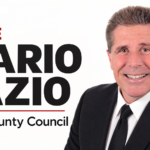 Vote for Mario Fazio for City/County Council
Thu, Oct 22 · 11:00 am
The Lawrence House Centre for the Arts 127 Christina St. South Sarnia, ON