Oct22
Aamjiwnaang seeks accountability from INEOS over alleged benzene exposure
Aamjiwnaang First Nation is suing INEOS over alleged benzene emissions from its Sarnia plant, claiming the company’s operations led to evacuations, relocation costs, environmental harm and years of disruption for the community.
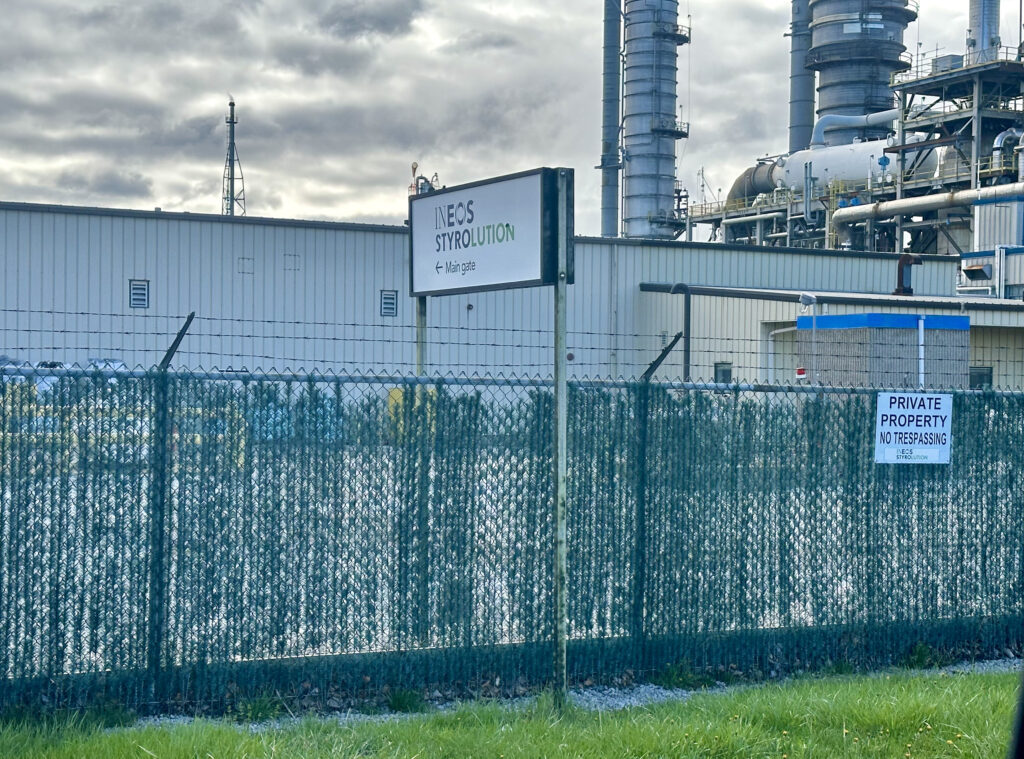
Aamjiwnaang First Nation has launched legal action against INEOS, alleging the company’s Sarnia chemical operations exposed the community to pollution, forced evacuations and disrupted life on the First Nation for years.
The statement of claim, filed March 27, names INEOS Styrolution Canada Ltd., INEOS Styrolution America LLC, INEOS Styrolution Group GmbH and INEOS Quattro Holdings Ltd., the company’s parent firm in the United Kingdom.
The allegations have not been proven in court. INEOS has filed a notice of intent to defend.
At the centre of the lawsuit is the INEOS Styrolution facility on Tashmoo Avenue, located beside Aamjiwnaang First Nation in Sarnia’s Chemical Valley. The plant used benzene to produce styrene monomer, a material used in plastics and synthetic rubber products.
Benzene is a known carcinogen and a natural component of petroleum.
Aamjiwnaang has been under a state of emergency since April 2024, after elevated benzene readings were recorded in the community and some members reported symptoms including nausea, dizziness, headaches and throat irritation.
According to the claim, portions of the First Nation were subjected to evacuation orders after air monitors repeatedly detected benzene levels above federal and provincial standards. The First Nation’s band office is located about 100 metres from the INEOS site.
The lawsuit alleges INEOS failed to properly modernize its Sarnia operation, including its tanks, equipment and pollution-control systems, despite years of concerns about the age and condition of the site.
Aamjiwnaang alleges the company failed to make reasonable upgrades that could have reduced exposure to pollution, including improvements to tanks, ventilation systems and site maintenance. The claim also alleges INEOS continued operating with aging infrastructure and failed to meet a series of provincial environment ministry orders dating back to 2019.
The First Nation is seeking unspecified damages for alleged harm to the environment, nuisance, costs related to evacuations, relocation of band facilities and operations, air filtration, air monitoring, environmental testing, medical monitoring and other expenses connected to the state of emergency.
The claim also seeks compensation for Aamjiwnaang and its members for alleged collective nuisance, mental distress and trauma.
Aamjiwnaang is also calling for testing and remediation of two company-owned properties, known as the Styrene I and Styrene II sites. The claim alleges spills, leaks, contamination and adverse events have left the properties polluted in ways that continue to affect the First Nation.
The lawsuit also alleges elevated emissions continued even after the Sarnia site was decommissioned late last year.
INEOS has previously said benzene levels were not outside its prescribed limits. The company has also said the Sarnia facility has been safely shut down through a regulated process involving the removal of materials and decommissioning of equipment.
In 2024, the dispute escalated after provincial and federal orders were issued to INEOS to limit benzene emissions. On May 1, 2024, Ontario’s Ministry of the Environment, Conservation and Parks suspended INEOS Styrolution’s environmental compliance approval, saying readings at the site remained above acceptable levels despite earlier orders requiring the company to reduce emissions.
INEOS later announced it would permanently close the Sarnia facility. The company announced in October 2024 that the site would shut down, and said in December the shutdown had been completed.
Aamjiwnaang’s lawsuit points to INEOS’s 2024 annual report, which the First Nation says shows the decision to close the Sarnia site was made before the April 2024 benzene emergency. The First Nation has pushed back against any suggestion the community caused the plant’s closure.
“Aamjiwnaang did not cause this closure,” chief and council said in an April news release. “The facility’s fate was determined by Ineos, not by our community.”
In the same release, Aamjiwnaang leadership said the First Nation has not sought to drive industry out of the region.
“What we have always asked for, and will continue to demand, is that industry operate responsibly, safely and with full respect for the rights and well-being of Aamjiwnaang, and that our Nation be included as a partner in decisions that affect us.”
The lawsuit also describes broader impacts on community life. Aamjiwnaang says events have been cancelled, turnout at others has dropped and members have faced ongoing uncertainty because of evacuation orders and concerns about pollution.
The First Nation has about 900 residents living on reserve, along the St. Clair River, about five kilometres south of Lake Huron. About 1,600 members live off reserve.
For Aamjiwnaang, the lawsuit marks another escalation in a long-running fight over industrial emissions in a community surrounded by some of Canada’s largest petrochemical operations.
The case will now move through the court process, where INEOS is expected to respond to the allegations in a statement of defence.
More to read
 Sarnians4Palestine asks candidates how they would support First Nations consultation on pipeline
 Ontario Command takes control of Sarnia Legion Branch 62
 Sarnia and Point Edward receive $482,274 in casino revenue payments
 W.W.G.D? (What Would Gladu Do?) By SPROINK!
 Vote for Mario Fazio for City/County Council
Events
Oct22
Sarnia Police Service Board open meeting
Thu, Oct 22 · 9:00 am
Sarnia Police Headquarters – Community Room
Oct22
Oct22
EarlyON-Nature Park Program
Thu, Oct 22 · 9:30 am
Bridgeview Park 4241-4299 Petrolia Line Petrolia, ON
Oct22