
I. Executive Summary: The Fiscal Crossroads of Sarnia Policing The Sarnia Police Service (SPS) is currently at a critical financial juncture, characterized by a proposal for a new headquarters estimated […]
The Sarnia Police Service (SPS) is currently at a critical financial juncture, characterized by a proposal for a new headquarters estimated to cost over $91 million, a figure projected by architectural assessments to surpass $120 million once fully costed. This expenditure is being justified by a narrative of infrastructure failure at the existing 1987 headquarters and a massive future capacity requirement driven by speculative growth. This analysis concludes that the financial commitment required for the proposed 98,650 square foot headquarters is fiscally irresponsible and disproportionate to Sarnia’s current policing needs, especially when compared to far more cost-effective alternatives.
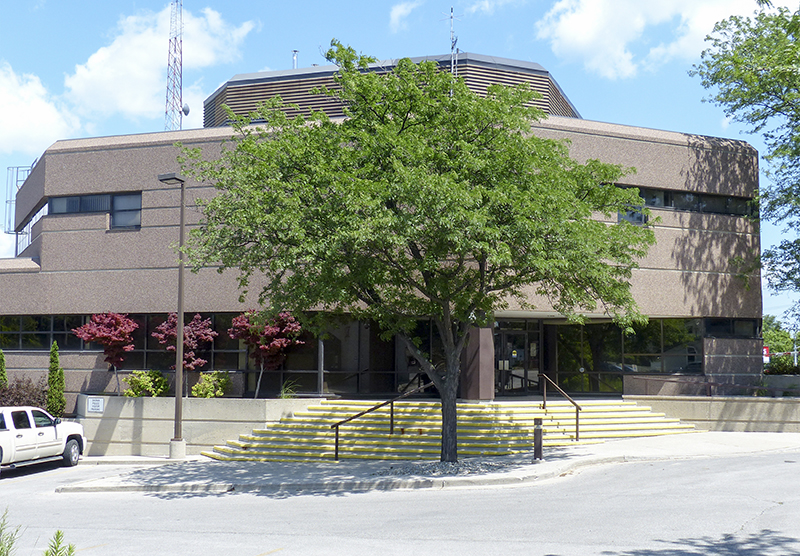
The Sarnia Police Service Headquarters, located at 555 Christina Street North, has been the primary operating base since its opening in 1987. The facility currently utilizes 45,088 square feet of space. The central justification for the massive capital project is the inadequacy and poor condition of this existing structure.
A critical component of the financial justification is the building's physical state. An analysis of independent consultant reports reveals a sharp contradiction in the documented condition of the facility over a short period. In January 2018, a "High-Level Building Condition Assessment Survey" completed by WalterFedy gave the headquarters high marks, assigning an "Overall Building Condition Rating" of "Excellent (80)".
This positive assessment stands in stark contrast to the reports used by the SPS in subsequent years to argue for total replacement. A 2023 Building Condition Assessment by Dillon Consulting did identify deficiencies typical of a facility built in 1987, such as the need for new HVAC systems, exterior window replacements, and concrete restoration. However, the report concluded that these required capital upgrades amounted to approximately $4.4 million needed to bring the facility into compliance with current code requirements.
The dramatic shift in the official narrative—from "Excellent" condition in 2018 to the current presentation of the building as being in an "untenable" crisis—suggests a strategic decision was made to define the problem not as a manageable, age-related infrastructure deficit, but as an irremediable functional and architectural inadequacy.
Historically, the City of Sarnia had invested in the headquarters. Between 2010 and 2021, nearly $1.5 million was spent on maintaining and upgrading the facility. This history of investment suggests the building's maintenance was not completely abandoned prior to the current capital plan. However, financial data indicates a subsequent shift in fiscal priorities. Mayor Mike Bradley noted that since 2022, the SPS has not prioritized capital upgrades to the existing facility, instead dedicating over $40,000 in 2025 toward planning and design development for the replacement project. The decision to invest public funds in designing a replacement while simultaneously allowing the $4.4 million in identified, necessary upgrades to linger raises serious questions about the SPS’s fiscal responsibility in preserving its existing assets. The preference is clearly for replacement over repair, even when repair is demonstrably cheaper and immediately necessary for code compliance.
The Sarnia Police Service currently leases dedicated training space at Lambton Mall, officially known as the Police Tactical and Academic Training Centre. This facility is 8,900 square feet and is utilized for in-service training, simulating tactical exercises, searches, and dealing with armed individuals. The facility was promoted as being unique in Canada for its mall location.
When the lease was initially secured, the reported annual cost was $60,000, based on a $5,000 monthly rate under a five-year agreement. This initial cost served as the baseline for evaluating the facility's value.
The budget documents, however, reveal a massive and unbudgeted escalation in the 'Lease – Facility Rent' line item (5-5-05100), demonstrating a critical failure in controlling ongoing operating costs.
Lambton Mall Lease Financial Reconciliation (Line 5-5-05100)
| Year | Budget/Actual Figure | Variance from Original $60,000 Annual Rate | Implied Annual Increase Rate | Notes |
|---|---|---|---|---|
| Original Annual Rate | $60,000 | N/A | N/A | Based on $5,000/month |
| 2024 Actuals | $92,311 | + $32,311 | 53.8% | Budget line 5-5-05100 |
| 2026 Budget | $101,750 | + $41,750 | 69.6% | Budget line 5-5-05100 |
| 2027 Budget | $121,750 | + $61,750 | 102.9% | Budget line 5-5-05100 |
| SPS Board 2026-2027 Claim | $265,000 | N/A | N/A | Justification for Phase 1 |
The 2027 budget figure of $121,750 represents a 102.9% increase over the original agreed-upon annual rate. This extreme variance indicates either a severe, unexplained increase in the base rent upon lease renewal or the inclusion of significant, previously omitted operational expenses (such as utilities, insurance, or common area maintenance) now bundled into the "Facility Rent" line.
Furthermore, the SPS Board used a different, higher figure to justify the urgency of building Phase One of the new headquarters, claiming the Lambton Mall lease would cost $265,000 over the two-year period of 2026 and 2027. The actual budgeted total for those two years ($101,750 + $121,750) is $223,500. The failure to maintain consistent, verifiable figures for such a high-profile operating cost is a significant oversight in financial transparency and management. The rapid escalation of this lease liability is currently being leveraged as a powerful argument by the SPS to justify the $25 million Phase One proposal, which includes building a permanent training facility to eliminate the reliance on leased space.
The proposed new Sarnia Police headquarters is intended to be a 98,650 square foot facility, replacing the current 45,088 sq.ft. building. The plan seeks to accommodate long-term growth and specialized operations.
The initial estimate presented to the public and city council for construction, contingency, and architectural fees was approximately $91,358,600 + HST. However, preliminary documents from the architectural firm +VG (The Ventin Group Ltd.) explicitly detail that this figure is an incomplete "order of magnitude" estimate. It systematically excludes a wide array of associated expenses, including "soft costs, applicable taxes, tariffs, permit fees, speciality fees, specialty equip., solar, [and] geothermal". When these necessary non-construction costs and potential future contingencies are included, the total taxpayer-funded cost is estimated to well exceed $120 million. Additionally, the cost of decommissioning the existing Christina Street facility remains unknown and is not factored into the estimate.
The preliminary cost calculation is predicated on an estimated construction cost of $865 per square foot. This figure is intended to fund the facility's 98,650 square foot footprint.
An analysis of industry benchmarks for public facilities indicates that the national average cost for police station construction is approximately $580 per square foot. The proposed Sarnia Police headquarters’ cost per square foot is nearly $285, or 49%, higher than the industry average for this class of building.
This significant premium strongly suggests that the design incorporates high-cost, specialized, and arguably non-essential elements. This cost inflation, combined with the decision to more than double the size of the existing headquarters, is the driving force behind the nine-figure price tag and lends credence to Mayor Mike Bradley’s characterization of the project as a "vanity project". If Sarnia were to build a 98,650 square foot facility at the national benchmark cost of $580/sq.ft., the construction total would be roughly $57 million (before soft costs), demonstrating that the current cost is a function of scope inflation rather than market necessity.
The primary rationale for the vast scale of the new facility is rooted in accommodating specialized functional needs and aggressive future growth projections.
Chief Derek Davis and the SPS Board have emphasized that the replacement is necessary because the current building cannot meet the "unique and specific needs of a Police Service". The space needs assessment focuses overwhelmingly on the infrastructure of control—functions that inherently require a centralized, high-security facility. These include specialized Prisoner Handling Facilities, dedicated Forensic Identification Facilities, expanded Seized Property Storage, secure indoor vehicle bays, and a drive-through Sally port for secure prisoner transfer. The inability to easily decentralize these high-security and specialized technical functions is central to the argument for a single, large structure.
A highly scrutinized element of the SPS planning documents is the justification for the proposed capacity. The reports explicitly cite the "long-term potential" for the SPS to take over policing for Point Edward and the entirety of Lambton County from the Ontario Provincial Police (OPP). The documents project that such an expansion would require an additional 75 to 100 officers, dramatically increasing the required facility size.
However, this foundational premise is contradicted by municipal partners. Officials in Point Edward, including the Mayor and Deputy Mayor, confirmed there have been no discussions or consultations with Sarnia Police or its board regarding a change in policing services or transfer from the OPP. Mayor Bradley has also noted that city council has never endorsed expanding police services outside Sarnia. Basing a capital expenditure of this magnitude on unapproved and non-consulted future municipal expansion is financially untenable. This method of fictional capacity planning ensures the facility is intentionally oversized for Sarnia's current and foreseeable needs, forcing taxpayers to absorb the financing costs for speculative capacity that may never materialize.
The overwhelming public response to the $91 million proposal has been one of skepticism and outright rejection, with approximately 84% of engaged residents either opposing the cost or proposing alternatives. This public outcry necessitates a serious examination of alternatives, primarily the strategic use of smaller, decentralized facilities.
In response to Mayor Bradley’s use of strong mayor powers to remove $5.7 million in financing costs from the 2026 budget, the SPS Board presented a compromise: a phased approach starting with a $25 million Phase One.
Phase One is planned to include essential non-headquarters infrastructure: a new training facility, a back-up communications centre, and a firing range. It would also cover the preparatory costs of servicing the chosen land site near the Western Sarnia-Lambton Research Park. The primary financial justification presented by the Board is that this phase, financed over 30 years, would cost approximately $1.5 million annually, translating to a relatively minor 1.71% increase to the tax levy, and would allow the SPS to terminate the escalating Lambton Mall lease.
While the $25 million figure is significantly less palatable than the full $91 million, its strategic function is to serve as a commitment trap. This initial expenditure commits the city to the chosen location, establishes foundational, expensive infrastructure (like the communications center and land servicing), and initiates the process of full replacement. Once millions are invested in land and ancillary buildings, arguing against the subsequent Phase Two (the remaining $66 million to $95 million for the main headquarters block) becomes politically and logistically challenging, effectively locking the municipality into the full, expensive project.
The most frequently cited alternative solution by Sarnia residents is decentralization, advocating for a precinct model or substations in key areas, such as the north and south ends of the city. This model offers a path to fiscal responsibility while promoting modern policing practices.
Canadian police deployment models, such as the Police de quartier approach, emphasize maximizing service points and decentralizing activities to optimize patrol distribution and community engagement. The fiscal advantage of a precinct model in Sarnia lies in the separation of functions based on security and architectural necessity:
The Hybrid Precinct Model avoids the massive debt associated with the $91 million single-structure headquarters while simultaneously addressing the functional deficiencies of the current space by relocating administrative and public-facing functions out of the congested core.
Comparative Financial and Operational Analysis: Facility Strategy Options
| Strategy | Estimated Total Capital Cost (Fully Loaded) | Estimated Annual Debt Service (30 Yr) | Primary Operational Focus | Key Fiscal Risk |
|---|---|---|---|---|
| Full New HQ (SPS initial ask) | Over $120 Million | $approx$ $5.7 Million | Centralized Carceral Architecture & Speculative Growth | Excessive square footage at inflated cost benchmark |
| Phased Approach (Phase 1 Only) | $25 Million | $approx$ $1.5 Million | Training, Communications, Land Servicing (Pre-commitment) | High probability of being locked into full Phase 2 expenditure. |
| Hybrid Precinct Model | $approx$ $4.4M (HQ stabilization) + Operational Leases | Significantly Lower Debt Burden | Decentralized Community Service; Optimized Security Hub | Requires shift in policing deployment methodology and ongoing operational leasing costs. |
The evidence suggests that the Sarnia Police Service is attempting to secure a nine-figure capital investment based on questionable metrics, including a rapid deterioration narrative and speculative growth projections. The massive proposed size (98,650 sq.ft.) and inflated cost per square foot ($865) are not justifiable given the modest cost of stabilizing the existing facility ($4.4M) and the available option of decentralized service delivery.
Based on this financial and operational review, the following recommendations for fiscal prudence are presented to Sarnia City Council and the Police Services Board:


